What "body odour" actually is (and where it comes from)
Sweat itself is basically odourless. The smell happens when bacteria on warm, damp, low-airflow skin break it down — which is exactly why skin folds (underboob, thigh creases, butt) get funky faster than an open forearm. So freshness is really a game of three levers:
- Reduce the buildup bacteria feed on (dead skin, product residue) → that's what an exfoliating wash does.
- Slow the bacteria + mask what's left on the skin surface → that's what a topical deodorant does.
- Keep the area drier and less friction-prone → moisture and rubbing make it worse.
Notice what's not on that list: your vagina. Genital odour comes from internal pH and flora, not skin-fold bacteria — so no external body product fixes it (more on that below).
Does it work — honestly?
- Topical body deodorant for skin folds: yes, for most people. Applied to clean, dry skin, a body-safe deodorant meaningfully reduces underboob/thigh/butt odour through the day. Independent review roundups of the big whole-body brands say the same thing — and that results are polarized: some people get a full day, others need a midday reapply, and a minority react to a fragrance or ingredient. Patch test, and don't expect antiperspirant-level sweat-stopping unless it actually contains an antiperspirant.
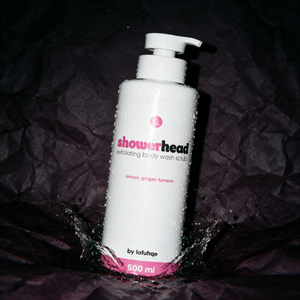
- Exfoliating body wash: yes, as prevention. Clearing dead-skin and product buildup removes what odour bacteria feed on. It's a base layer, not a same-day odour eraser.
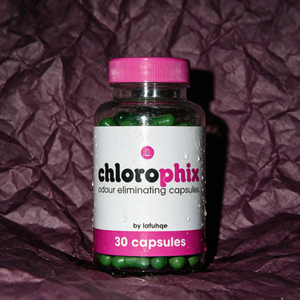
- Chlorophyll capsules for body odour: a popular inside-out habit. Chlorophyll — and chlorophyllin, the form used in most supplements — has a long history as an internal deodorizer, used to help manage body and breath odour from the inside. Plenty of people take it daily and say they feel noticeably fresher, especially through summer, workouts, or hormonal weeks. Think of it as a supportive daily ritual that layers inside-out freshness on top of your outside-in steps (washing and a topical deodorant).
Bottom line: freshness products work in their lane. The ones that disappoint are the ones sold as magic.
Body freshness options — honest comparison
| Approach | What it really does | Best for | Honest limitation |
|---|---|---|---|
| Body deodorant (topical) | Cuts odour on skin-fold skin, adds light scent | Underboob, thighs, butt, all-day wear | Doesn't stop sweat; results vary; possible fragrance irritation |
| Antiperspirant | Blocks sweat via aluminium | Heavy sweating specifically | Not the same as "deodorant"; some prefer to avoid aluminium |
| Exfoliating body wash | Removes buildup bacteria feed on | Prevention, keeping folds clean | Not an instant odour fix on its own |
| Scented body oil | Moisture + lasting light scent | Dry skin, layering a signature scent | Adds scent, doesn't neutralize odour |
| Chlorophyll capsules (oral) | Inside-out odour support many people swear by | Daily all-over freshness from within | A daily habit — pairs with washing + topical, not a same-day fix |
| Feminine "spray" on the vulva | ❌ | — | Not recommended near genitals — can irritate and disrupt flora |
What to look for in a body deodorant
- Made for body skin, not just pits. Skin folds are more delicate and more enclosed. You want something formulated to sit on that skin comfortably all day.
- Aluminium-free if you want a deodorant (not an antiperspirant). Know which one you're buying — they do different jobs.
- A short, sensible ingredient list. Heavy fragrance, drying alcohols, and baking soda are the usual irritation culprits — especially anywhere near intimate skin.
- External use, kept off the vulva. "Whole body" means the body's skin — folds, chest, thighs, feet — not inside or on the vulva itself.
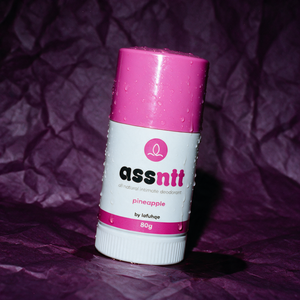
This is the lane Assntt (All-Over Body Deodorant) was built for — literally formulated for underboobs, booty creases, and inner thighs, the spots a normal armpit stick forgets. Aluminium-free, made to sit on delicate fold-skin all day, applied to clean dry skin. Over 6,000 people use it as their fresh-everywhere step. One product, one honest job: odour on the skin, done well.
What people actually say
Read the candid discussions and reviews on whole-body deodorant and a consistent pattern emerges: people who use it for skin folds and set realistic expectations love it; the disappointed reviews come from people who expected it to (a) stop sweat entirely, (b) last 72 hours no matter what, or (c) fix a vaginal smell. The first is an antiperspirant's job, the second is marketing, and the third isn't a deodorant problem at all. Match the product to the actual job and satisfaction goes way up — which is exactly why we'd rather tell you the limits.
Safety — read this part
- Keep body deodorant external and off the vulva. The vulva and vagina are self-cleaning; armpit-style deodorants and "feminine sprays" can irritate delicate tissue and disrupt healthy flora. For freshness down there, gentle external washing is enough.
- A persistent vaginal odour is a health signal, not a deodorant problem. A strong fishy or unusual smell, itching, or unusual discharge can mean BV or another issue — get it looked at by a health professional you trust (doctor, naturopath, or midwife); masking it delays care. (Odour tied to internal pH is a different topic — see our boric acid guide.)
- Patch test first, especially anything fragranced, and stop if you get burning, redness, or itching.
- Deodorant ≠ antiperspirant. If your real issue is heavy sweating (or sudden new night sweats), that's a medical conversation worth having.
- Supplements like chlorophyll can interact or cause mild GI upset for some people — check with a provider if you take medication or are pregnant.
This article is for education, not medical advice. LAFUHQE products are intended to support everyday freshness — not to diagnose, treat, or cure any condition. A persistent or unusual odour, itching, or discharge deserves a conversation with a health professional you trust.